


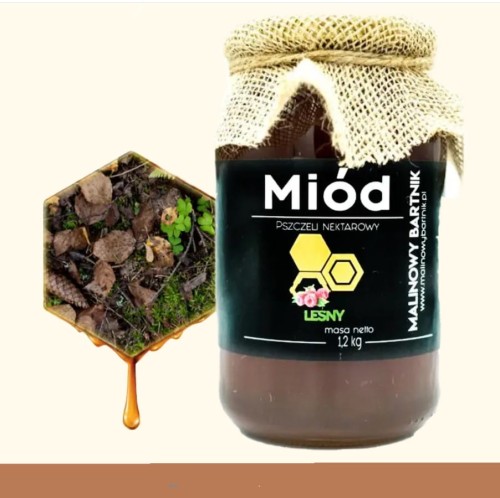
Forest honey 1100g Malinowy Bartnik



Regular price:
product unavailable
 Description
Forest honey 1200g Polish apiary
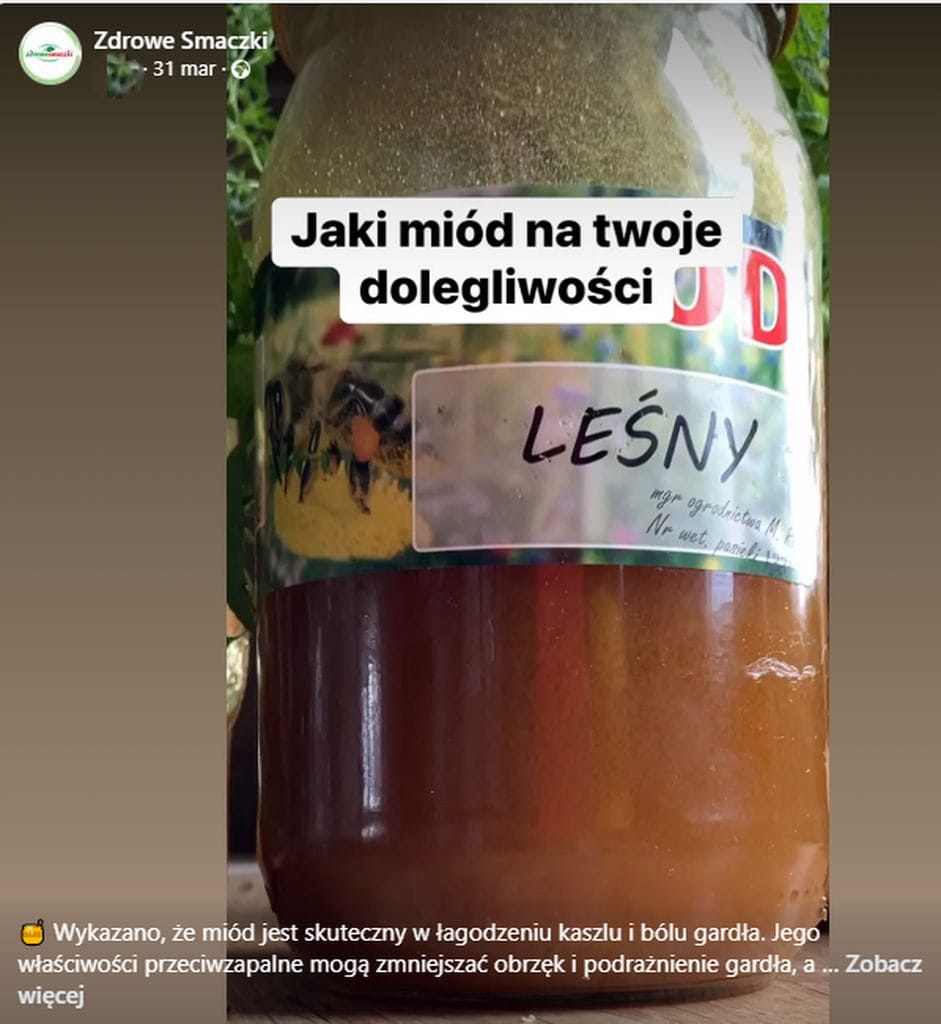
Forest honey is made on the basis of nectar and honeydew honey. The nectar obtained by bees from flowers is combined with honeydew of coniferous trees (e.g. pine) and deciduous trees (e.g. linden), which they find in the forest area near which the hives are placed. And so in forest honey we can find traces of wild rose flowers, raspberries, blackberries, other wild shrubs, chamomile, dandelion, sage, St. John's wort.

Energy value and ingredients of forest honey
Forest honey contains flavonoids (quercetin, rutin, tannins), phenolic acids (coffee, chlorogenic), other organic acids, simple sugars (glucose and fructose), which account for as much as 75% of the content, essential oils, proteins ( also enzymes), vitamins (B, C), minerals (magnesium, calcium, phosphorus, potassium, iron).
The energy value of 100g varies between 305-320 Kcal, the glycemic index is about 55
Properties of forest honey
- strengthens both physically and mentally, with a nourishing and regenerative effect - hence recommended in stressful situations, when the body is exhausted, but also for athletes
- works as an antibiotic, supporting the body in diseases of the upper respiratory tract (colds, flu)
- has an immune and strengthening effect (used prophylactically)
- anti-inflammatory (antihistamine)
- antibacterial properties (presence of flavonoids)
- improves the condition of the cardiovascular system, prevents cardiac arrhythmias, facilitates blood circulation
- stabilizes blood pressure
- helps with urinary tract problems
- applied externally, it improves the appearance of the skin (cleanses, moisturizes, regenerates) and rejuvenates it
- flavonols (quercetin, rutin) strengthen blood vessels, stabilize blood pressure
- rutin delays the breakdown of vitamin C
- reverses the adverse effects of heavy metals (lead) on the body
- soothing, calming, relaxing
Use of forest honey
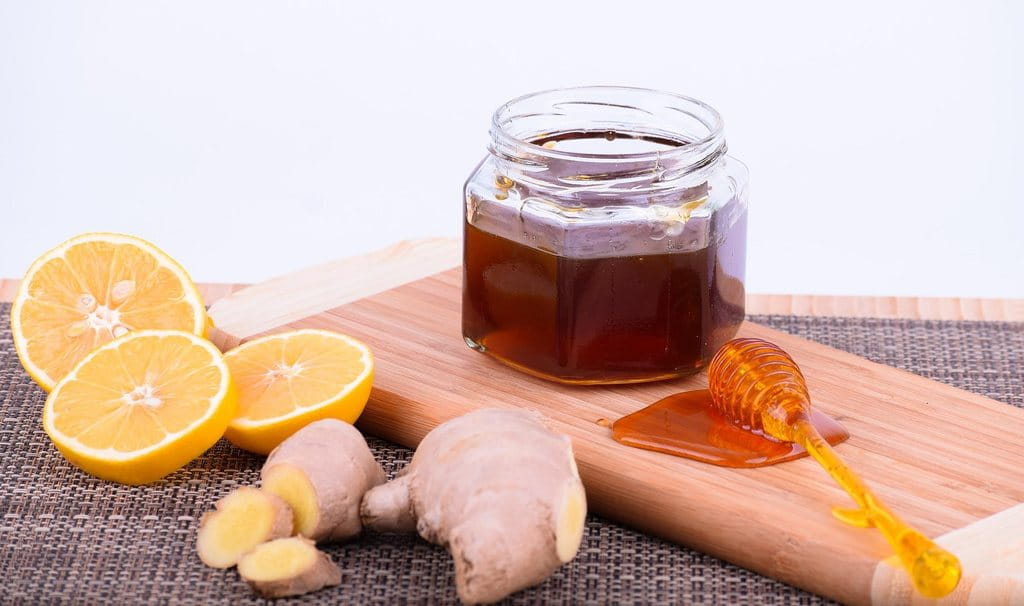
Forest honey is a great addition to toast, bread, pancakes and desserts. It can be added to chilled tea or coffee as a sugar substitute. You can also use it on cooled water and drink it after a few hours with the addition of lemon, preferably early in the morning.