


€8.10
Regular price:
€9.00

Teas are a true kingdom of flavors and aromas.
A cold autumn evening, your favorite book, a blanket and... delicious tea from our online store. Pleasantly aromatic, full of delicious flavor. These are the mixes we offer for making hot infusions. In the offer of our online store you will find, among others, tea varieties with the taste of chokeberry, Kamchatka berry, as well as natural herbs such as purge, mint or hibiscus. Various types (including green, red, black and white versions) are your companions during rest and relaxation.
Health teas

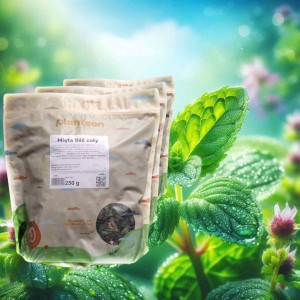



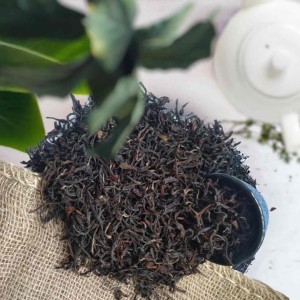
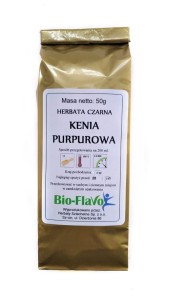



A large selection of tea in our store
The tea comes from the Camellia sinensis (L.) Kuntze shrub. Two forms are important in production, ie Camellia sinensis var. sinensis (weaker growing, with smaller leaves) and Camellia sinensis var. assamica (a form that grows up to 30m, with large leaves). The most tea is produced by Asians, especially China (the former form), India (the latter form), and Africa.
There are several types of tea;
- Slightly oxidized (unfermented) teas in which there is little oxidation:
a. bai cha white teas - made of young top buds and accompanying first leaves
b. green la cha teas, e.g. gunpowder, sencha, yunnan
c. Huang cha yellow teas, most often obtained from young buds, which are subjected to the process of yellowing by heating, cooling and drying several times, and wrapping in a moist material, these are very noble teas
d. matcha tea - it is made from pulverizing green leaves without petioles and even veins, which have limited access to sunlight 2-3 weeks before harvesting - Teas made by oxidation (fermentation), which is interrupted at various stages:
a.black teas (called red hong cha in China due to the color of the infusions they give) - obtained by full fermentation (oxidation over 90%) of green leaves, the best known are assam, ceylon, darjeeling, yunnan
b. red teas (pu-erh), which in China are classified as dark hei cha - after a shortened oxidation (fermentation) at the level of 20- 80%, they are stored in dark rooms (formerly caves) for up to several dozen years. There are two types of these teas, i.e. sheng (so-called raw) and shu (matured). They can be sold as loose leaves or compressed from small discs to large bricks or rectangles
c. oolong teas (oolong, wulong) known as emerald, blue or turquoise (in China as Black Dragon) - after harvesting shaken several times in rolling machines (rarely in baskets called wok) until they reach yellow color, oxidation between 20-80 %, sometimes toasted.
Each of these teas is brewed differently and each has its own specific taste and aroma. In some countries, brewing tea is a real ceremony, such as in Japan (Chanoyu ceremony). In China, the art of brewing Gongfu cha is slowly disappearing with the older generation.
Tea contains a number of nutrients such as vitamins A, C, E, K, B, catechins (the most epigallocatechin gallate - with a very strong antioxidant effect), purine alkaloids (theine being a form of caffeine), amino acids, lipids, minerals (fluorine).
Tea has a stimulating and diuretic effect. It prevents tooth decay (fluoride content), heart and circulatory system diseases, atherosclerosis, and the development of glaucoma. Green tea is commonly used in cosmetology for the production of lotions, creams, tonics and even perfumes.
Perfect coffees for every day
Coffee is the most popular drug in the world. It comes from Ethiopia and today it is grown in Africa, Asia, Central and South America (most of them in Brazil). The most common crops are Arabica (Coffea arabica) and robusta (Coffea canephora). Coffee contains a lot of carbohydrates, amino acids and fats, but most of all purine alkaloids such as caffeine, glycosides, terpenes (caffeine and cafestol), phenolic acids (coffee and chlorogenic), some B vitamins, minerals (such as potassium). Roasted coffee is commonly drunk. Sipping coffee e.g. improves memory and concentration, improves blood circulation, accelerates metabolism, prevents neurodegenerative diseases such as Parkinson's, reduces the occurrence of type II diabetes, helps in the fight against certain types of cancer (intestine, bladder, prostate).
Coffee has a strong stimulating effect. However, when drunk in excess, i.e. over 3 cups (over 300 mg of caffeine) a day, it is addictive, arousing anxiety, makes it difficult to fall asleep, raises cholesterol (especially Arabica, which has more terpenes), leaches calcium and magnesium due to its dehydrating effect, may lead to miscarriages in case of abuse.