


Sultana raisins 1kg Makar


Regular price:
product unavailable
 Description
Sultana raisins 1kg Makar
Small raisins are the dried fruit of the vine (Vitis vinifera).
Raisins are a very tasty and valuable dried fruit obtained by drying grapes. They contain a number of valuable substances, such as macro and microelements (potassium, iodine, boron), large amounts of fiber, some vitamins C, E, K and group B, organic acids, flavonoids.

The nutrients of raisins and their health benefits
Raisins contain a lot of potassium, which, when consumed regularly, can significantly lower blood pressure. The content of calcium and phosphorus prevents osteoporosis. The presence of iron works against anemia, boron facilitates concentration, supports the growth of healthy bones, keeps joints in good condition and iodine supports the thyroid gland.
Raisins are rich in organic acids, e.g. citric, malic, tartaric, with diuretic properties. Despite the fact that they consist of as much as 50-70% of sugars (mainly fructose and dextrose), they reduce blood glucose levels, and the presence of fructans (fructose derivatives) referred to as prebiotics supports the development of intestinal microflora, facilitates the absorption of calcium and magnesium. In turn, a large amount of fiber protects against colon cancer, supports the body in the fight against cardiovascular diseases and obesity. The content of acid and olean aldehyde helps in the fight against caries, despite the fact that raisins contain a lot of the aforementioned sugars, but the simple ones. A large amount of sugar proves the high energy potential of raisins and can be an alternative to bars for athletes.
Raisins (like grapes) may prevent type 2 diabetes both due to their fiber content and possibly due to their high amounts of anthocyanins. Researchers have also found that raisins may reduce the risk of giving birth early. Raisins also have an anticoagulant effect and prevent platelet aggregation.
Due to the large amount of sugars and high calorific value, they should be consumed in moderation by slimming people.
Polyphenols in raisins and health
From flavonoids (strong antioxidants) the most common are:
- flavonols (quercetin, rutin) with anti-inflammatory, anti-atherosclerotic, anti-allergic properties, slowing down the oxidation of vitamin C
- flavanols (catechins, epicatechins) with antibacterial, antiviral, antioxidant, antithrombotic and antimutagenic properties
- anthocyanins (cyanidin, malvidin, delphinidin, pelargonidin, petunidine, peonidine) with detoxifying, strengthening for blood vessels, anti-aggregating, delaying aging processes.
But we can also find here phenylcarboxylic acids (protocatechuic, ellagic), which have antioxidant properties.
Nutritional and energy value of 100g of raisins
Energy value 299 Kcal
Protein 3.1g, fats 0.5g, carbohydrates 79.2g (including simple sugars 59.2g), fiber 3.7g
Minerals: Potassium 749mg, Phosphorus 101mg, Calcium 50mg, Magnesium 32mg, Sodium 11mg, Iron 1.9mg, Zinc 0.2mg, Copper 0.3mg, Manganese 0.3mg, Selenium 0.6 µg
Vitamins: C 2.3mg, B1 0.1mg, B2 0.12mg, B3 0.77mg, B4 11.1mg, B6 0.17mg, E 0.1mg, K 3.5µg

Raisins in the kitchen
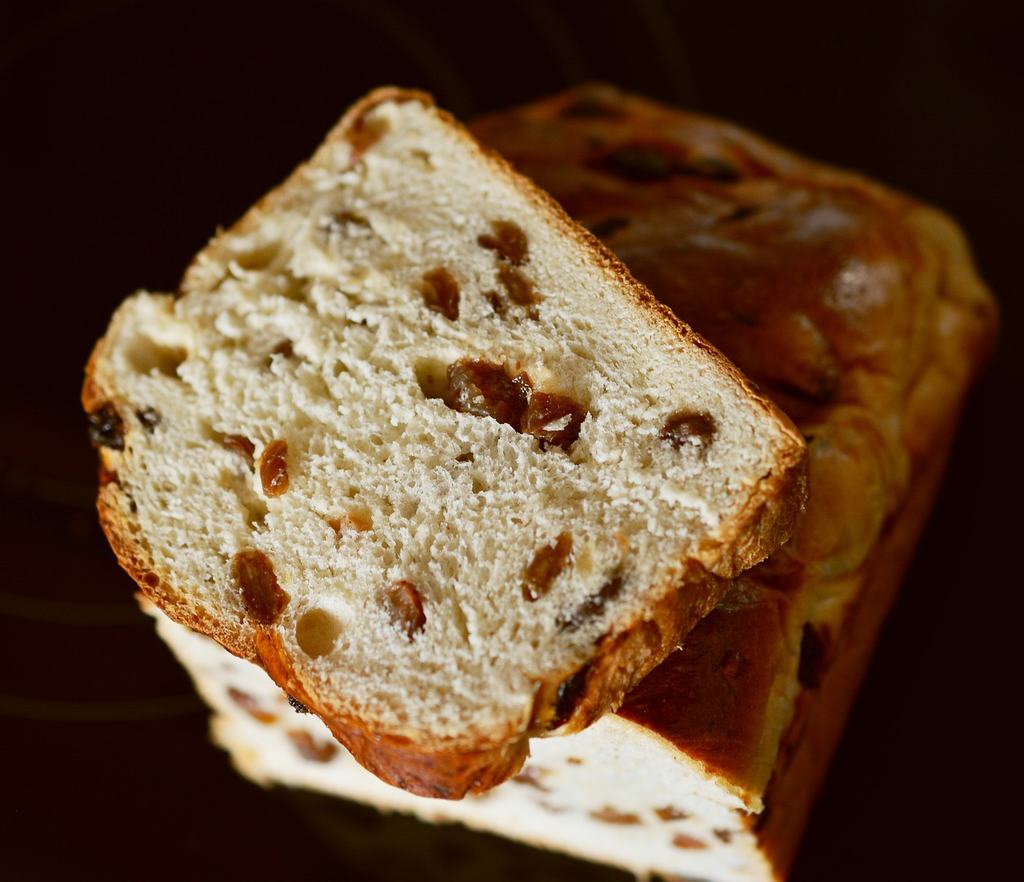
Raisins are tasty as a snack. They are perfect as an addition to cakes, e.g. cheesecake, yeast cake. They can be an addition to dried fruits and nuts ice cream, chocolate, they are also produced as raisins in chocolate. They are also recommended as an addition to oatmeal or muesli. They can be combined with meat, e.g. for stuffing. They are popular in Jewish cuisine (Jewish carp).